A little background
Lemon zest supplies fragrant citrus oils, while juice supplies acidity; using both avoids a sauce that tastes only sour. The cheese and starchy cooking water form a thin coating rather than a heavy cream sauce. Grate the cheese finely so it melts quickly. Removing the pan from direct heat before adding it reduces the risk of clumps.
THE RECIPE
Ingredients for Lemon Pasta
Yield: 4 servings. Measure the ingredients before starting, and keep optional additions separate until needed.
- 12 ounces / 340 g spaghetti
- 2 tablespoons olive oil
- 2 garlic cloves, finely sliced
- Zest of 1 lemon
- 2 tablespoons lemon juice, plus more to taste
- 1/2 cup grated vegetarian hard cheese
- 2 tablespoons chopped parsley
- 1/4 teaspoon black pepper
- Salt for pasta water
Step-by-step instructions
- Cook spaghetti in salted boiling water until just short of tender. Reserve 1 cup of pasta water.
- Warm olive oil in a wide pan. Add garlic and cook gently for 1 minute without browning.
- Add lemon zest and 1/2 cup pasta water, then the drained spaghetti. Toss over medium heat until the noodles finish cooking.
- Remove from the heat and add lemon juice and cheese in stages, tossing continuously. Add more warm pasta water if needed.
- Finish with parsley and pepper. Taste before adding extra lemon juice or salt.
Cooking tips and troubleshooting
Adding all the cheese to a very hot, nearly dry pan can produce strings and lumps. Keep a little moisture in the pan and toss in small additions. Avoid aggressively browning the garlic, which can overwhelm the lemon.
Have the sauce ready
Pasta continues cooking after it leaves the water, so it helps to have the sauce base almost ready before draining. Read through the sequence and set out the ingredients that are added at the end. A wide pan gives you room to toss without breaking the pasta or spilling hot sauce. If the sauce needs a longer stage, such as slowly softening vegetables, complete most of that work first. The pasta pot can then become the final timed element rather than waiting on the counter while the sauce catches up.
Keep some cooking water
The cloudy water from the pasta pot contains starch released during cooking. A small amount helps a sauce spread over the pasta and join water with oil or melted cheese. Scoop it out before draining, using a heat-safe cup. Start with less than you think you need, toss, and then add more by spoonfuls. The aim is a thin coating that moves with the pasta, not a watery pool. Different shapes and brands release different amounts of starch, so visual judgement is more useful than treating every tablespoon as an exact formula.
Judge the pasta itself
Packet timing is a starting point. Taste a piece shortly before the stated time and look for a centre that is cooked but still resilient. Pasta that will finish in a warm sauce can leave the water a little early, but it should not have a hard, chalky core. Very soft pasta can break during tossing and continue softening in leftovers. Keep the boil steady and stir early to stop pieces sticking together. Avoid adding oil to the cooking water: it does not reliably prevent sticking and can make it harder for a sauce to cling.
Control heat at the finish
The final ingredients often need less heat than the sauce base. Cheese, fresh herbs, and citrus can lose their best texture or aroma if cooked aggressively. Follow the stated instruction about removing the pan from the heat. If cheese is included, grate it finely and add it gradually while tossing. A little retained warmth and cooking water are usually enough to combine the sauce. If a sauce tightens suddenly, loosen it with warm pasta water before adding more fat. Stirring patiently is more effective than trying to correct the texture with a large splash all at once.
Taste a complete forkful
Taste pasta together with its sauce rather than tasting only the liquid in the pan. Cheese, salted cooking water, and vegetables all affect the final seasoning. Add acid or pepper in small steps. A sauce that seems strongly seasoned by itself may be just right once spread across a bowl of pasta, while a sauce that tastes gentle on a spoon may become bland when diluted. Keep the chosen main flavour clear; adding several extra herbs or spices at the end can make a simple recipe feel muddled.
Serve while the sauce is loose
Pasta absorbs liquid as it stands, which means a sauce that looks slightly loose in the pan can settle into the right coating on the plate. Warm bowls help keep the meal comfortable without extended holding. Put any simple side dish on the table first and serve the pasta promptly. For leftovers, refrigerate safely and expect the texture to change. Reheat gently with a small splash of water or broth, then add a fresh finishing ingredient if appropriate. Avoid repeated cycles of heating and cooling; reheat only the portion you plan to eat.
Variations to try
Use linguine instead of spaghetti, or add peas during the last 2 minutes of pasta cooking. For a dairy-free version, omit the cheese and finish with toasted breadcrumbs and a little extra olive oil; the result is lighter and less creamy.
Serving suggestions
Serve immediately with green vegetables or a tomato salad. The clean citrus flavour works especially well with peppery leaves.
Storage and leftovers
Refrigerate leftovers for up to 3 days. Reheat with a splash of water and finish with fresh lemon only after warming.
Planning, ingredients, and portions
Read the ingredient labels
Ingredient names describe a role in the recipe, but packaged products can contain additional seasonings, sweeteners, or allergens. Choose plain versions where the list specifies plain yogurt, purée, tomatoes, or milk. Check broth, sauces, chocolate, bread, and spice blends individually rather than assuming the dish name tells you everything about its ingredients. If cooking for someone with an allergy, ask about their requirements and prevent cross-contact with utensils and surfaces. A vegetarian recipe can still contain milk, eggs, wheat, soy, sesame, or nuts. The suggested variations are flavour and cooking options, not a guarantee that every product on your shelf fits a particular diet.
Scale ingredients without scaling every minute
For a smaller batch, reduce the ingredient quantities proportionally and choose equipment that still allows the intended depth or space. For a larger batch, doubling ingredients does not always mean using one larger pan or doubling the cooking time. Crowding, depth, and evaporation change how the food cooks. Work in batches where the method depends on browning or handling individual portions. Keep the doneness checks in the instructions as your final guide. Divide leftovers into useful portions rather than reheating the entire batch repeatedly. If a recipe includes a small quantity of salt or a strong spice, start conservatively and taste before making the final adjustment.
Understand the estimated nutrition
The nutrition figures below are rough editorial estimates per stated serving of the base recipe. They are not laboratory results and should not be treated as precise dietary advice. Brands, portion sizes, optional garnishes, ingredient substitutions, and how much cooking fat remains in the dish can all change the result. The figures cover calories, protein, carbohydrate, and fat; they do not provide a complete micronutrient or sodium analysis. If you need accurate values for a medical or carefully controlled dietary plan, calculate the recipe using the specific products and quantities you actually use, then divide by the measured number of portions.
Plan the meal around the recipe
Consider what this recipe already contributes before choosing a side. A vegetable side may need beans, grains, eggs, or another suitable component to make a satisfying meal, while a substantial pasta, bean bowl, or filled wrap may need only fresh vegetables alongside. Sweet bakes are portions of dessert or baking rather than a complete meal simply because they include fruit or vegetables. Appetite and individual needs vary, so the stated yield is a practical way to divide the batch, not a rule about how much every person must eat. The serving suggestions below are intended to help you build a meal with contrasting textures and flavours.
Nutrition information
Approximate nutrition per serving of the base recipe; optional toppings and substitutions are excluded. These figures are editorial estimates, not a verified analysis.
- Energy
- 430 kcal
- Protein
- 15 g
- Carbohydrate
- 66 g
- Fat
- 13 g
Frequently asked questions
How do I know lemon pasta is ready?
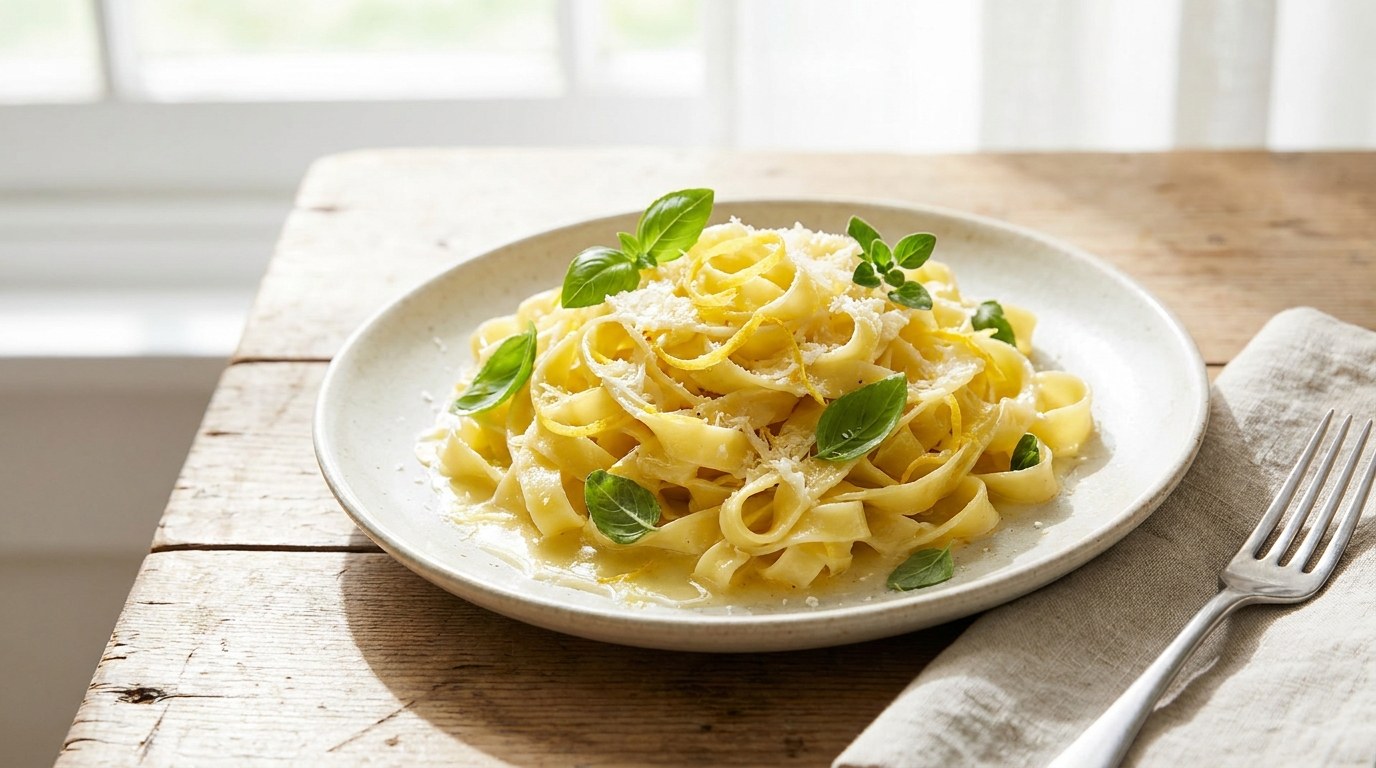
The target is separate pasta strands coated in a light, glossy lemon sauce. Use that description alongside the specific checks in the final cooking or assembly step. The suggested 25 minutes is a guide for active preparation and cooking, and it does not override the visible or texture cues. Ingredient sizes and equipment can change the timing. Check a representative portion rather than assuming the first piece you see represents the whole batch.
Can I prepare this recipe ahead?
Refrigerate leftovers for up to 3 days. Reheat with a splash of water and finish with fresh lemon only after warming. Prepare any durable ingredients first and keep delicate finishing ingredients separate where practical. When planning ahead, allow time for the final cooking, reheating, or assembly rather than assuming the dish can sit at room temperature until the meal. Food should be stored in a clean covered container, and fresh toppings should be added close to serving.
What should I change if the texture is wrong?
Adding all the cheese to a very hot, nearly dry pan can produce strings and lumps. Keep a little moisture in the pan and toss in small additions. Avoid aggressively browning the garlic, which can overwhelm the lemon. Review ingredient quantities and the stage at which the texture changed before adding several new ingredients. A small correction is easier to assess than a large one. If extra liquid is suitable, add it gradually; if more cooking is required, continue gently and check again. The technique notes above explain the main controls for this type of recipe.
Can I change the ingredients for my diet?
Use linguine instead of spaghetti, or add peas during the last 2 minutes of pasta cooking. For a dairy-free version, omit the cheese and finish with toasted breadcrumbs and a little extra olive oil; the result is lighter and less creamy. Read labels for the exact products you use, including toppings and sides. One substitution does not automatically remove all allergens. Keep the core quantities stable and choose one suggested change for a first attempt.
Bring it to the table
Lemon Pasta works best when you focus on its main ingredients and the texture described here: separate pasta strands coated in a light, glossy lemon sauce. Prepare the components in order, taste where appropriate, and choose a simple accompaniment rather than adding unnecessary complexity. Serve immediately with green vegetables or a tomato salad. The clean citrus flavour works especially well with peppery leaves. Keep a note of the timing and seasoning that suited your equipment so your next batch is easier to plan.