A little background
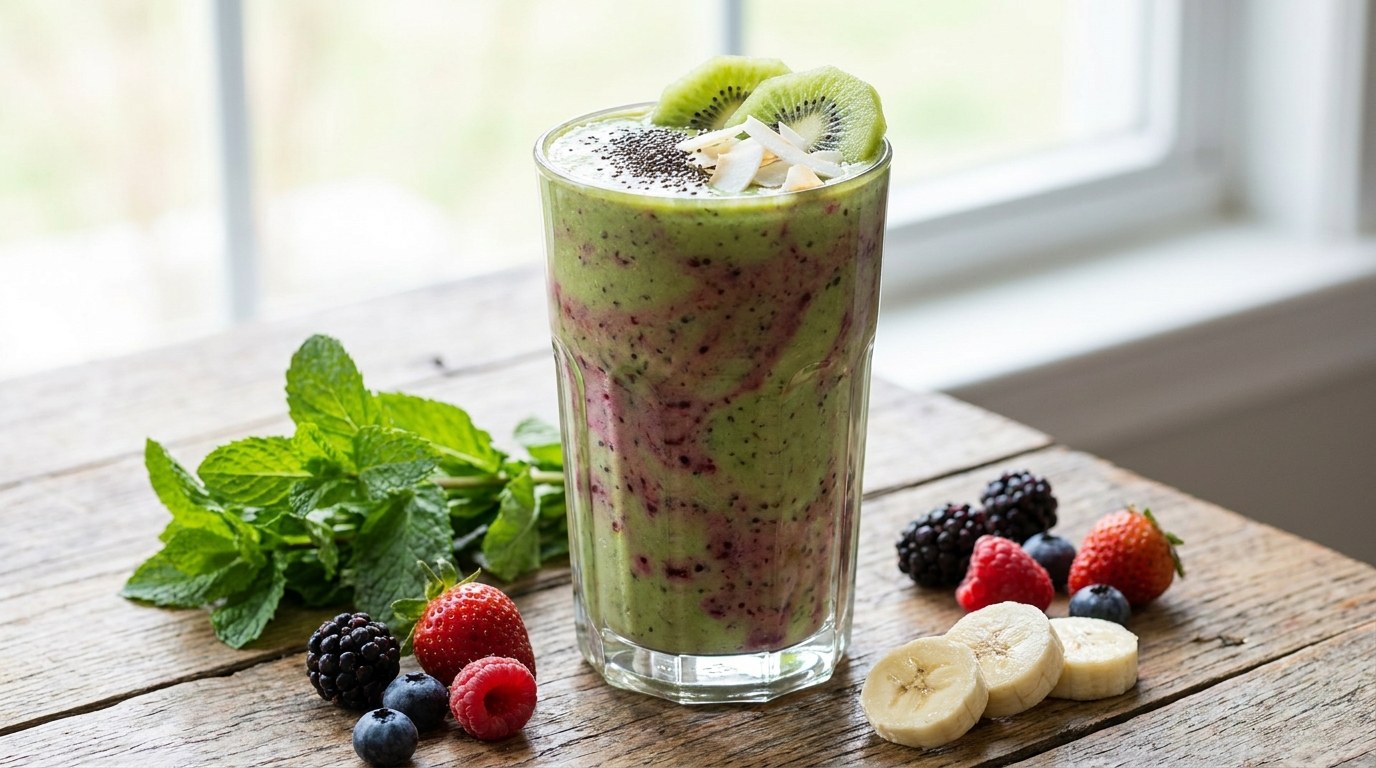
A mixed berry smoothie balances sweet banana with the brighter flavour of frozen fruit. Liquid goes into the blender first so the blades can circulate the heavier ingredients. Spinach is used in a modest amount; it adds colour without turning the glass into a strongly vegetal drink. Flaxseed thickens the mixture slightly and should be ground rather than whole for a smooth result.
THE RECIPE
Ingredients for Smoothie
Yield: 2 servings. Measure the ingredients before starting, and keep optional additions separate until needed.
- 1 ripe banana
- 1 cup frozen mixed berries
- 1 cup unsweetened soy milk or milk of choice
- 1/2 cup plain yogurt or plant yogurt
- 1 small handful spinach
- 1 tablespoon ground flaxseed
- 1–3 tablespoons water if needed
Step-by-step instructions
- Add milk and yogurt to the blender first.
- Add banana, berries, spinach, and flaxseed.
- Blend until smooth, stopping to scrape down safely if needed.
- Add water a tablespoon at a time if the mixture is too thick to circulate.
- Pour into two glasses and serve promptly.
Cooking tips and troubleshooting
Too little liquid can cause the blades to spin beneath a frozen lump. Stop the blender, adjust safely, and add a splash of water instead of forcing the motor. Follow the appliance guidance for frozen ingredients.
Choose fresh ingredients for their texture
When a recipe is mostly assembled rather than cooked, ingredient condition becomes especially noticeable. Look for vegetables that feel firm, fruit that is ripe without being spoiled, and herbs with clean, fresh leaves. Wash produce under running water and dry it before using it. Water clinging to leaves or vegetables dilutes a dressing and can make the finished bowl loose. If a cooked component is included, let it cool safely before mixing with delicate raw ingredients. The recipe directions identify any element that needs heating first.
Prepare the components before combining
Set out the measured ingredients and prepare the cuts before you begin mixing. This makes it easier to distribute flavour evenly and protects ingredients that deteriorate quickly once cut. Similar-sized pieces are comfortable to eat together, while a blend should have pieces small enough for the appliance to handle. Keep a separate tasting spoon ready. If the recipe uses a spread or dressing, mix its liquid ingredients first so salt, acid, and flavourings are distributed rather than hidden in one corner of the final bowl.
Add liquid gradually
Liquid changes texture quickly in a no-cook mixture. Start with the stated amount and reserve any optional additions until you have assessed the result. A dip needs enough body to stay on a spoon, a dressing must coat without flooding the ingredients, and a drink should circulate and pour smoothly. Those are different targets, so use the texture description for this recipe. If a mixture is too thick, loosen it a spoonful at a time. Adding a large volume can be difficult to reverse without changing every other ingredient.
Balance richness with freshness
Oil, avocado, seeds, dairy, and nut pastes can make a mixture satisfying but also rich. Citrus, vinegar, herbs, and fresh vegetables provide contrast. Taste the mixture before increasing the acid or salt. The balance should make the main ingredient clearer rather than hiding it. Fresh citrus varies in strength, so even a measured recipe benefits from a final taste. If the bowl feels harsh, a little extra of the main unsalted ingredient is often more useful than adding sugar simply to cancel the sharpness.
Think about resting and serving
Some mixtures need a short rest so flavours combine; others are best served immediately to preserve a crisp or bright texture. Follow the specific timing given here. Do not assume every cold recipe improves after a full night in the refrigerator. Raw vegetables can release water once salted, cut avocado can brown, and herbs can darken. Where possible, prepare the durable components ahead and complete the final mixing close to the meal. Keep perishable ingredients refrigerated while waiting rather than leaving a prepared bowl out for convenience.
Keep the serving clean and safe
Use clean utensils and avoid returning a tasting spoon to the shared bowl. At a picnic or buffet, keep perishable food chilled and put out smaller portions as needed. Refrigerate leftovers promptly; acidity alone does not make a fresh mixture safe for prolonged room-temperature storage. Do not treat an uncooked salsa or vegetable mixture as a validated canning recipe. For packed lunches, keep any crisp garnish or bread separate until eating. A final stir and taste after refrigeration can restore an even texture without requiring a completely new batch.
Variations to try
Replace berries with frozen mango for a different flavour, or omit spinach if preferred. Use dairy-free milk and yogurt for a vegan version. A spoonful of peanut butter can replace the flaxseed, but it introduces an additional allergen and changes the flavour.
Serving suggestions
Serve as part of breakfast alongside toast or oats if you need a more substantial meal. A smoothie is convenient, but it does not need to replace every component of a balanced breakfast.
Storage and leftovers
Best immediately after blending. Refrigerate covered for up to 1 day and stir before drinking; separation and colour changes are normal.
Planning, ingredients, and portions
Read the ingredient labels
Ingredient names describe a role in the recipe, but packaged products can contain additional seasonings, sweeteners, or allergens. Choose plain versions where the list specifies plain yogurt, purée, tomatoes, or milk. Check broth, sauces, chocolate, bread, and spice blends individually rather than assuming the dish name tells you everything about its ingredients. If cooking for someone with an allergy, ask about their requirements and prevent cross-contact with utensils and surfaces. A vegetarian recipe can still contain milk, eggs, wheat, soy, sesame, or nuts. The suggested variations are flavour and cooking options, not a guarantee that every product on your shelf fits a particular diet.
Scale ingredients without scaling every minute
For a smaller batch, reduce the ingredient quantities proportionally and choose equipment that still allows the intended depth or space. For a larger batch, doubling ingredients does not always mean using one larger pan or doubling the cooking time. Crowding, depth, and evaporation change how the food cooks. Work in batches where the method depends on browning or handling individual portions. Keep the doneness checks in the instructions as your final guide. Divide leftovers into useful portions rather than reheating the entire batch repeatedly. If a recipe includes a small quantity of salt or a strong spice, start conservatively and taste before making the final adjustment.
Understand the estimated nutrition
The nutrition figures below are rough editorial estimates per stated serving of the base recipe. They are not laboratory results and should not be treated as precise dietary advice. Brands, portion sizes, optional garnishes, ingredient substitutions, and how much cooking fat remains in the dish can all change the result. The figures cover calories, protein, carbohydrate, and fat; they do not provide a complete micronutrient or sodium analysis. If you need accurate values for a medical or carefully controlled dietary plan, calculate the recipe using the specific products and quantities you actually use, then divide by the measured number of portions.
Plan the meal around the recipe
Consider what this recipe already contributes before choosing a side. A vegetable side may need beans, grains, eggs, or another suitable component to make a satisfying meal, while a substantial pasta, bean bowl, or filled wrap may need only fresh vegetables alongside. Sweet bakes are portions of dessert or baking rather than a complete meal simply because they include fruit or vegetables. Appetite and individual needs vary, so the stated yield is a practical way to divide the batch, not a rule about how much every person must eat. The serving suggestions below are intended to help you build a meal with contrasting textures and flavours.
Nutrition information
Approximate nutrition per serving of the base recipe; optional toppings and substitutions are excluded. These figures are editorial estimates, not a verified analysis.
- Energy
- 210 kcal
- Protein
- 9 g
- Carbohydrate
- 31 g
- Fat
- 6 g
Frequently asked questions
How do I know smoothie is ready?
The target is smooth and pourable, without hard frozen pieces or large leaf flecks. Use that description alongside the specific checks in the final cooking or assembly step. The suggested 10 minutes is a guide for active preparation and cooking, and it does not override the visible or texture cues. Ingredient sizes and equipment can change the timing. Check a representative portion rather than assuming the first piece you see represents the whole batch.
Can I prepare this recipe ahead?
Best immediately after blending. Refrigerate covered for up to 1 day and stir before drinking; separation and colour changes are normal. Prepare any durable ingredients first and keep delicate finishing ingredients separate where practical. When planning ahead, allow time for the final cooking, reheating, or assembly rather than assuming the dish can sit at room temperature until the meal. Food should be stored in a clean covered container, and fresh toppings should be added close to serving.
What should I change if the texture is wrong?
Too little liquid can cause the blades to spin beneath a frozen lump. Stop the blender, adjust safely, and add a splash of water instead of forcing the motor. Follow the appliance guidance for frozen ingredients. Review ingredient quantities and the stage at which the texture changed before adding several new ingredients. A small correction is easier to assess than a large one. If extra liquid is suitable, add it gradually; if more cooking is required, continue gently and check again. The technique notes above explain the main controls for this type of recipe.
Can I change the ingredients for my diet?
Replace berries with frozen mango for a different flavour, or omit spinach if preferred. Use dairy-free milk and yogurt for a vegan version. A spoonful of peanut butter can replace the flaxseed, but it introduces an additional allergen and changes the flavour. Read labels for the exact products you use, including toppings and sides. One substitution does not automatically remove all allergens. Keep the core quantities stable and choose one suggested change for a first attempt.
Bring it to the table
Smoothie works best when you focus on its main ingredients and the texture described here: smooth and pourable, without hard frozen pieces or large leaf flecks. Prepare the components in order, taste where appropriate, and choose a simple accompaniment rather than adding unnecessary complexity. Serve as part of breakfast alongside toast or oats if you need a more substantial meal. A smoothie is convenient, but it does not need to replace every component of a balanced breakfast. Keep a note of the timing and seasoning that suited your equipment so your next batch is easier to plan.