A little background
Fresh rolls depend on crisp vegetables and a careful balance between filling and wrapper. Fine strips are easier to bundle than chunky pieces. Rice paper keeps softening after it leaves the water, so it does not need to become completely floppy during the dip. Arrange everything first; stopping halfway through a roll to chop a vegetable makes tearing more likely.
THE RECIPE
Ingredients for Spring Rolls
Yield: 4 servings; 8 rolls. Measure the ingredients before starting, and keep optional additions separate until needed.
- 8 rice paper wrappers
- 3 ounces / 85 g thin rice noodles
- 1 carrot, cut into fine strips
- 1 cucumber, cut into fine strips
- 1 bell pepper, cut into fine strips
- 1 cup shredded lettuce
- 1 handful mint leaves
- 1 handful coriander / cilantro
- 3 tablespoons peanut butter
- 1 tablespoon soy sauce
- 1 tablespoon lime juice
- 3–5 tablespoons warm water
Step-by-step instructions
- Prepare the rice noodles according to their packet, drain, rinse if directed, and cool.
- Arrange the vegetables, herbs, and noodles within reach. Whisk peanut butter, soy sauce, lime, and warm water into a pourable dipping sauce.
- Dip one wrapper briefly in lukewarm water, then lay it on a clean damp board. It will continue softening.
- Place a modest line of filling in the lower third. Fold the bottom over, tuck in the sides, and roll gently but firmly.
- Repeat with the remaining wrappers. Keep rolls apart and covered with a lightly damp clean cloth until serving.
Cooking tips and troubleshooting
Overfilling is the most common reason a wrapper splits. Start with a smaller amount and increase only when you are comfortable rolling. Avoid stacking finished rolls because moist rice paper sticks strongly to itself.
Prepare the filling before assembling
Assembly is more comfortable when all the components are ready and within reach. Chop vegetables, measure sauces, and cook any ingredients that require heat before opening the wrappers or arranging the shells. Keep raw and cooked components separate while preparing them, and use clean utensils when combining. A filling that is evenly cut is easier to portion. The recipe may include rice, noodles, beans, eggs, or crisp vegetables; use the specific cooking and cooling directions rather than treating every filling in the same way.
Keep moisture under control
A filling should be pleasant to eat without flooding its container. Drain beans or noodles thoroughly, let cooked vegetables release excess steam, and use watery sauces sparingly inside an assembled portion. Extra sauce can be served alongside. Moisture is useful for tenderness but can weaken a thin wrapper or collect beneath a stuffed vegetable. Taste the filling before assembly so seasoning can be adjusted evenly. Adding a large splash of dressing to a finished roll or shell is harder to distribute without breaking the structure.
Make room at the edges
Overfilling is tempting, especially when the filling tastes good, but it makes assembly and serving less reliable. Leave space where a wrapper needs to fold or where the filling needs to settle. Divide the mixture approximately across all portions before committing most of it to the first few. A compact but gentle arrangement is better than forcefully packing everything in. If there is extra filling, serve it separately rather than stretching or splitting a wrapper to use the final spoonful.
Treat the outside as its own ingredient
The wrapper or shell has a texture that needs attention independently of the filling. Follow the recipe for warming, soaking, or pre-cooking it. A cold tortilla may split, rice paper can become too sticky if soaked for too long, and a raw vegetable shell may remain firm after the filling is already hot. Those are different problems with different solutions. Do not assume extra sauce will repair them. A brief preparation step for the outside usually makes the assembled portion easier to handle and more enjoyable to eat.
Finish close to the meal
Fresh toppings and crisp components often work best near serving. Keep avocado, delicate herbs, and raw crunchy vegetables separate if the cooked base will be reheated. If the whole assembled portion is baked, confirm that the centre is hot rather than judging only the outside colour. Set out the serving plates and any side dishes before completing the final assembly. This reduces the time that a warm filling sits in a fragile wrapper and helps preserve the intended contrast between soft and crisp ingredients.
Store components when possible
Separating leftovers often preserves texture better than packing fully assembled portions. Refrigerate perishable fillings promptly and use the specific storage guidance for any cooked rice or eggs. Warm only what you intend to eat, then assemble with fresh toppings. For a packed meal, keep chilled food cold during transport and avoid leaving it in a warm bag for hours. If a wrapper softens during storage, it may still taste pleasant, but expect a different texture from the freshly assembled recipe.
Variations to try
Use thinly sliced avocado or cooked tofu in place of some noodles. Substitute sunflower seed butter for peanut butter if appropriate, and use gluten-free tamari when avoiding wheat. Check all product labels for the allergens relevant to your table.
Serving suggestions
Serve with the dipping sauce and extra crisp vegetables. These rolls suit a light lunch or a starter before a warm soup.
Storage and leftovers
Best enjoyed freshly made. Refrigerate covered for up to 1 day, separating rolls with suitable food-safe material; wrappers may become firm.
Planning, ingredients, and portions
Read the ingredient labels
Ingredient names describe a role in the recipe, but packaged products can contain additional seasonings, sweeteners, or allergens. Choose plain versions where the list specifies plain yogurt, purée, tomatoes, or milk. Check broth, sauces, chocolate, bread, and spice blends individually rather than assuming the dish name tells you everything about its ingredients. If cooking for someone with an allergy, ask about their requirements and prevent cross-contact with utensils and surfaces. A vegetarian recipe can still contain milk, eggs, wheat, soy, sesame, or nuts. The suggested variations are flavour and cooking options, not a guarantee that every product on your shelf fits a particular diet.
Scale ingredients without scaling every minute
For a smaller batch, reduce the ingredient quantities proportionally and choose equipment that still allows the intended depth or space. For a larger batch, doubling ingredients does not always mean using one larger pan or doubling the cooking time. Crowding, depth, and evaporation change how the food cooks. Work in batches where the method depends on browning or handling individual portions. Keep the doneness checks in the instructions as your final guide. Divide leftovers into useful portions rather than reheating the entire batch repeatedly. If a recipe includes a small quantity of salt or a strong spice, start conservatively and taste before making the final adjustment.
Understand the estimated nutrition
The nutrition figures below are rough editorial estimates per stated serving of the base recipe. They are not laboratory results and should not be treated as precise dietary advice. Brands, portion sizes, optional garnishes, ingredient substitutions, and how much cooking fat remains in the dish can all change the result. The figures cover calories, protein, carbohydrate, and fat; they do not provide a complete micronutrient or sodium analysis. If you need accurate values for a medical or carefully controlled dietary plan, calculate the recipe using the specific products and quantities you actually use, then divide by the measured number of portions.
Plan the meal around the recipe
Consider what this recipe already contributes before choosing a side. A vegetable side may need beans, grains, eggs, or another suitable component to make a satisfying meal, while a substantial pasta, bean bowl, or filled wrap may need only fresh vegetables alongside. Sweet bakes are portions of dessert or baking rather than a complete meal simply because they include fruit or vegetables. Appetite and individual needs vary, so the stated yield is a practical way to divide the batch, not a rule about how much every person must eat. The serving suggestions below are intended to help you build a meal with contrasting textures and flavours.
Nutrition information
Approximate nutrition per serving of the base recipe; optional toppings and substitutions are excluded. These figures are editorial estimates, not a verified analysis.
- Energy
- 260 kcal
- Protein
- 7 g
- Carbohydrate
- 39 g
- Fat
- 9 g
Frequently asked questions
How do I know spring rolls is ready?
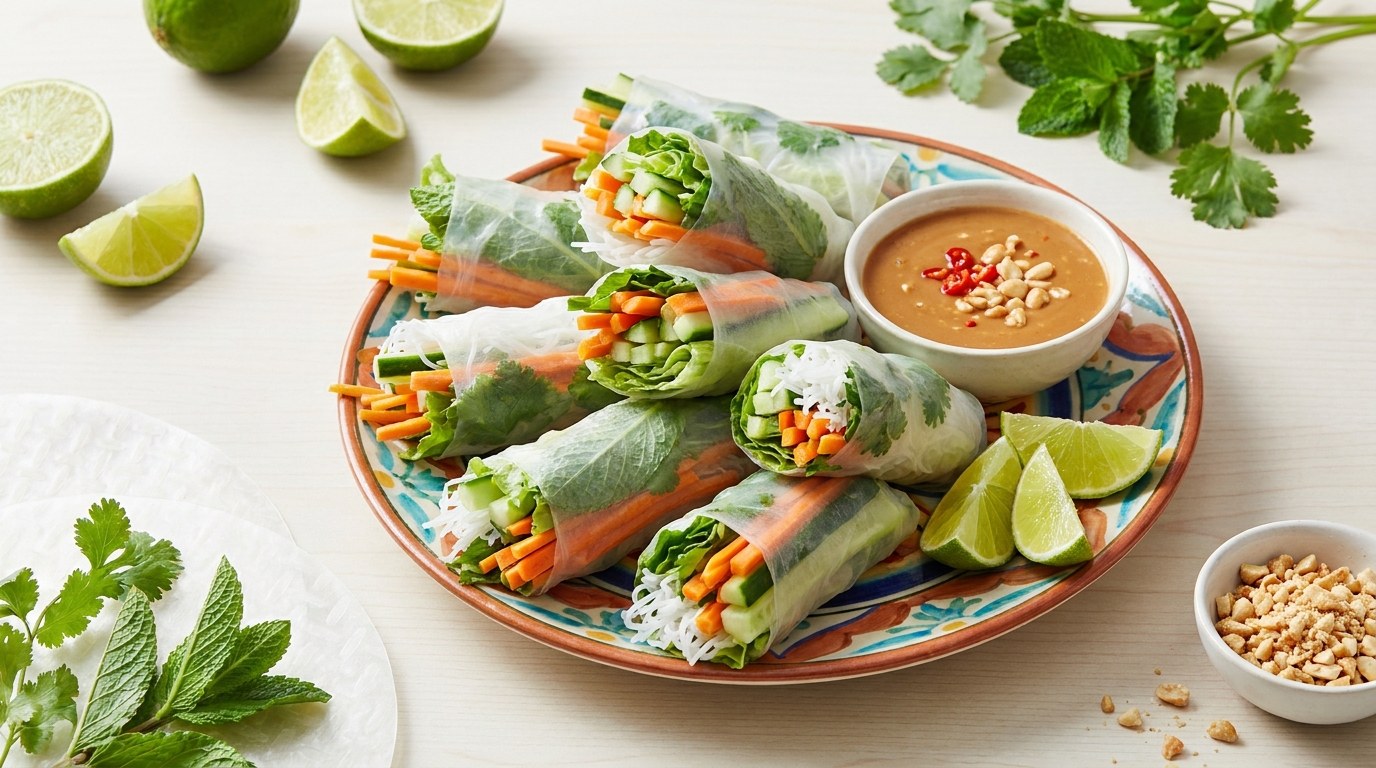
The target is soft translucent wrappers surrounding crisp vegetables and tender noodles. Use that description alongside the specific checks in the final cooking or assembly step. The suggested 35 minutes is a guide for active preparation and cooking, and it does not override the visible or texture cues. Ingredient sizes and equipment can change the timing. Check a representative portion rather than assuming the first piece you see represents the whole batch.
Can I prepare this recipe ahead?
Best enjoyed freshly made. Refrigerate covered for up to 1 day, separating rolls with suitable food-safe material; wrappers may become firm. Prepare any durable ingredients first and keep delicate finishing ingredients separate where practical. When planning ahead, allow time for the final cooking, reheating, or assembly rather than assuming the dish can sit at room temperature until the meal. Food should be stored in a clean covered container, and fresh toppings should be added close to serving.
What should I change if the texture is wrong?
Overfilling is the most common reason a wrapper splits. Start with a smaller amount and increase only when you are comfortable rolling. Avoid stacking finished rolls because moist rice paper sticks strongly to itself. Review ingredient quantities and the stage at which the texture changed before adding several new ingredients. A small correction is easier to assess than a large one. If extra liquid is suitable, add it gradually; if more cooking is required, continue gently and check again. The technique notes above explain the main controls for this type of recipe.
Can I change the ingredients for my diet?
Use thinly sliced avocado or cooked tofu in place of some noodles. Substitute sunflower seed butter for peanut butter if appropriate, and use gluten-free tamari when avoiding wheat. Check all product labels for the allergens relevant to your table. Read labels for the exact products you use, including toppings and sides. One substitution does not automatically remove all allergens. Keep the core quantities stable and choose one suggested change for a first attempt.
Bring it to the table
Spring Rolls works best when you focus on its main ingredients and the texture described here: soft translucent wrappers surrounding crisp vegetables and tender noodles. Prepare the components in order, taste where appropriate, and choose a simple accompaniment rather than adding unnecessary complexity. Serve with the dipping sauce and extra crisp vegetables. These rolls suit a light lunch or a starter before a warm soup. Keep a note of the timing and seasoning that suited your equipment so your next batch is easier to plan.